Pressure Washing vs Chemical Treatment: Why the Method Matters
Pressure washing and chemical treatment work differently. Learn what affects the right cleaning approach for driveways, paths, and outdoor surfaces.
Murray Warren6 min read
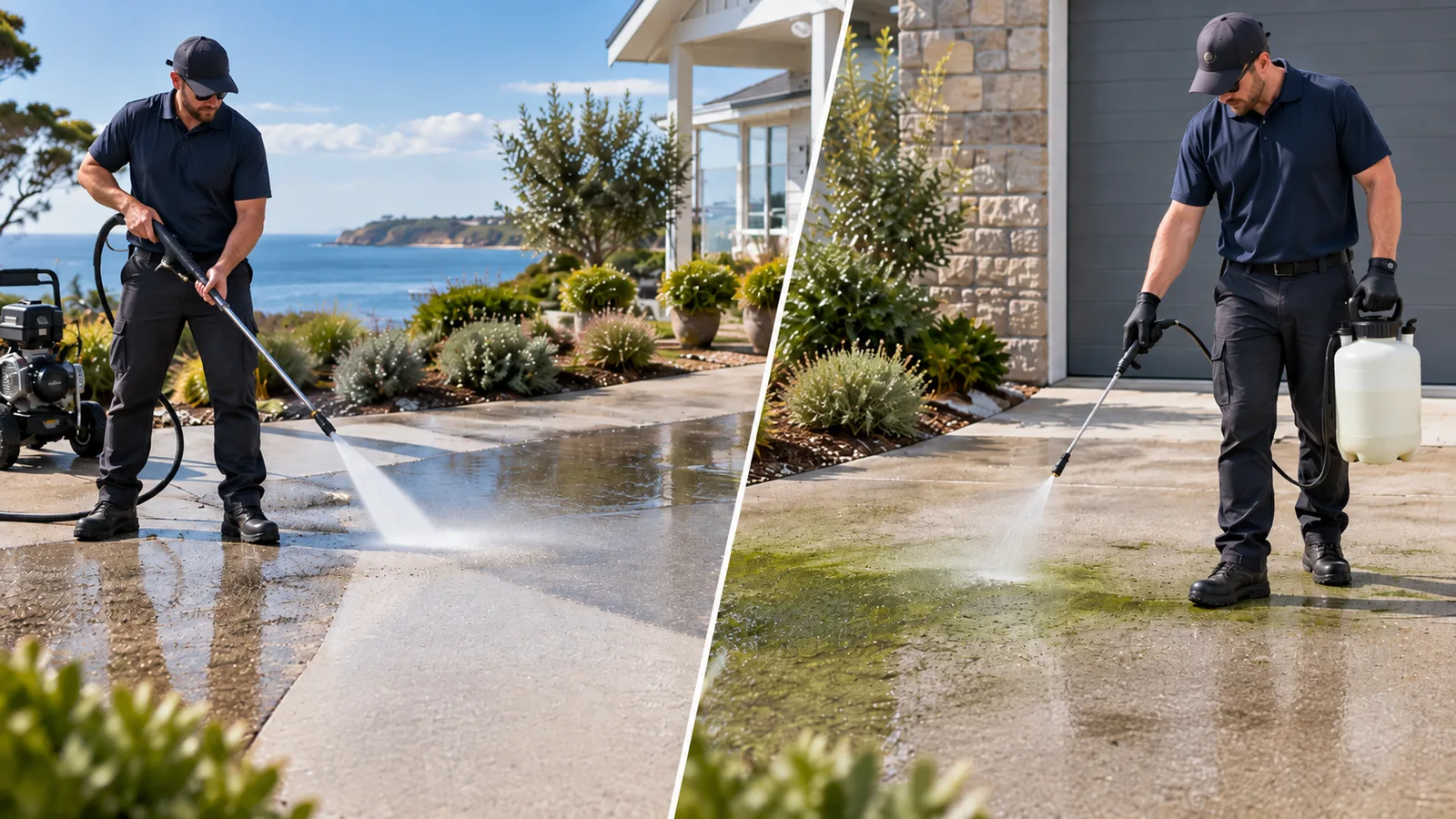
A driveway with ground-in dirt may need a different approach from a coated path with persistent discolouration. The way a surface looks does not, by itself, establish what is causing the problem, or how it should be cleaned.
Before booking outdoor cleaning, it helps to understand how the methods work, what can go wrong, and how to ask a provider for a clearly defined scope.
What Is Pressure Washing?
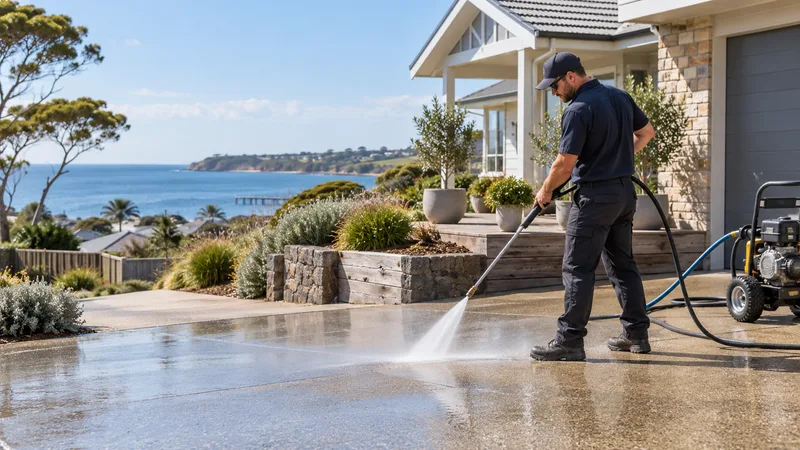
Pressure washing uses pressurised water to loosen and remove dirt, grime and other surface build-up. It's a mechanical cleaning method, meaning the water does the work of physically moving material away from the surface.
It can be suitable for a range of outdoor areas, including appropriate concrete surfaces, paths and driveways. But more pressure isn't automatically a better clean. Older, damaged, painted, coated or otherwise vulnerable surfaces may need a different approach.
The aim is to remove the build-up effectively while taking the condition of the surface into account.
What Is Chemical Treatment for Outdoor Surfaces?
Chemical treatment involves using a cleaning product designed to act on a particular type of deposit or build-up.
There isn't one universal “chemical treatment”. Different products have different purposes, ingredients, instructions, and surface compatibility. What may be appropriate for one surface or type of contamination may not be appropriate for another.
That's why chemical treatment shouldn't automatically be assumed to be gentler, safer, or more effective. The important questions are what the product is intended to address, whether it's suitable for the surface, and how any risks to people, plants, and drainage will be managed.
Pressure Washing vs Chemical Treatment: Key Differences
The useful comparison is more than just “water versus chemicals.” It is the cleaning action, the material being treated, and the site-specific risks.
Decision factor | Pressure washing | Chemical treatment | What to ask |
Main mechanism | Water pressure physically loosens or moves material. | A selected product acts on a particular deposit or contaminant. | What is causing the staining or build-up? |
Surface suitability | An unsuitable technique can affect fragile finishes or joints. | Product compatibility varies with concrete, pavers, coatings and sealers. | Have the material and finish been checked? |
Primary concerns | Surface impact, overspray, access and wastewater. | Product exposure, compatibility and contaminated runoff. | How will people, plants and drainage be considered? |
Likely result | May improve appearance without addressing every cause. | May help certain deposits but is not a permanent result guarantee. | What result is realistic, and what is excluded? |
When selected | Not automatically appropriate for every outdoor surface. | Not automatically required for every stain or green/black mark. | Why is this method being suggested here? |
Which Method Suits Different Surface Conditions?
The right cleaning approach starts with the surface and the problem, rather than simply the colour of the stain.
Concrete, pavers, painted surfaces, sealed areas, and older or weathered materials can all respond differently to cleaning. Existing cracks, repairs, coatings, or worn areas can also affect what's appropriate.
Then there's the build-up itself. Dirt, tire marks, leaf residue, and organic material aren't necessarily the same problem, and a green or black mark doesn't automatically tell you what caused it.
Finally, look at the surroundings. A driveway near a stormwater drain or a path beside garden beds raises different considerations from a more contained outdoor area.
A good cleaning recommendation should take all of these factors into account rather than assuming the same method will suit every property.
Can Pressure Washing Damage a Surface?
It can if the equipment or technique isn't appropriate for the surface.
Weathered, weakened, painted, or coated surfaces can be more vulnerable to changes in texture or finish. Existing damage, joints, and adjacent materials also need to be considered.
WorkSafe Victoria highlights hazards associated with high-pressure water jetting in industrial settings. Those situations shouldn't automatically be equated with routine residential cleaning, but they reinforce the importance of appropriate equipment and risk controls.
The key point is simple: don't assume every outdoor surface should be treated in the same way.
Are Chemical Cleaners Always Safer?
No. A cleaning product isn't automatically safer or gentler simply because it is being used instead of pressure.
Its suitability depends on the specific product, the surface, how it is handled, and what's around the cleaning area. Product instructions and relevant safety information also matter, particularly where people, plants, pets, or drainage are nearby.
So rather than asking whether chemicals are "better," ask why a particular product or method has been recommended for the surface and how the associated risks will be managed.
Can a Professional Combine Pressure Washing and a Cleaning Product?
Sometimes. A provider may determine that a combination of mechanical cleaning and an appropriate product makes sense for a specific surface and deposit. In other cases, one approach, or further assessment before cleaning, may be more suitable.
There is no standard combination that fits every property. If a quote includes a product-assisted process, ask what role the product plays, whether it is compatible with the surface, and what the provider will do to manage runoff and exposure. This describes general industry options; it is not a statement that M Warren Maintenance offers chemical treatment.
Why Do Runoff and Drainage Matter?
Cleaning goes beyond the surface. It matters where the water goes afterwards.
Runoff can carry dirt, sediment, oils, organic material, or cleaning products towards stormwater drains. That's why drainage deserves consideration whether a job uses water alone or involves a cleaning product.
EPA Victoria highlights the risk of pollutants entering stormwater and waterways through everyday household and business activities.
If you're booking outdoor cleaning, ask how the work will take nearby drains, gardens, and the direction of runoff into account.
What Should You Ask Before Accepting an Outdoor Cleaning Quote?
A useful quote makes the method and expected outcome understandable. Before you book, ask:
What type of surface and finish will you be cleaning?
What do you think is causing the staining or build-up?
Why is this cleaning method suitable for the surface?
Are any cleaning products included, and are they suitable for the surface?
How will nearby plants, people, and stormwater drainage be considered?
What's included in the quote, and what existing damage or staining is outside the scope?
What result can I realistically expect?
Pro Tip: Ask why a particular method is recommended for your surface, not simply which machine or product will be used. A practical explanation should cover the material, condition, likely build-up, surrounding plants and drainage, limitations, and exactly what the quote includes.
What Can M Warren Maintenance Help With?
M Warren Maintenance offers high-pressure cleaning across its confirmed Bellarine Peninsula service area.
If your driveway, path, or another outdoor area needs attention, you can contact the team to discuss the surface and request a quote. The most suitable cleaning approach will depend on the property, the surface condition, and what's causing the build-up.
For specific cleaning methods or treatments, ask what is recommended for your particular surface and what's included in the quote.
Helpful information
Frequently asked questions
What is the difference between pressure washing and chemical treatment?
Pressure washing is primarily mechanical: a stream of water loosens or removes material from a surface. Chemical treatment uses a selected product to act on a particular deposit or contaminant. Neither is automatically suitable for every surface. The best decision depends on the material, finish, type of build-up, exposure risks, and drainage around the work area.
Is pressure washing better than chemical cleaning for concrete?
Not for every job. The right approach depends on the concrete's condition, finish, and the type of build-up. Sound, uncoated concrete with surface dirt may respond differently from older, sealed, or damaged concrete.
Can pressure washing damage old or sealed concrete?
Yes, an unsuitable method can affect vulnerable materials or surface finishes. Age, existing wear, coatings, joints, and prior damage all influence how a surface responds. A quote should take those details into account before work begins. Do not assume that stronger water pressure is always the answer or that every sealed surface behaves alike.
Do black or green patches always need chemical treatment?
No. The colour of a patch alone does not tell you its cause or whether a product-assisted clean is required. Green areas may have organic material; dark areas may reflect dirt, vehicle marks, moisture, or several other causes. First consider the surface and likely source of the staining, then discuss the appropriate cleaning options.
Are outdoor cleaning chemicals always safe for gardens, pets and stormwater?
No product can be assumed safe in every setting. Suitability depends on its actual ingredients, instructions, surrounding plants, people and animals, and how residues or wastewater may move. Ask the provider about the specific product and precautions if one is proposed. EPA Victoria advises preventing pollutants from reaching stormwater drains and waterways.
Can a professional use both pressure washing and cleaning products?
Potentially, where a professional assessment supports that choice. Using two methods is not automatically necessary or better. Each part of the work should have a clear purpose, with surface compatibility, risk controls, and runoff considered. This general possibility does not confirm that M Warren Maintenance offers a chemical-treatment service.
What should I ask before booking outdoor surface cleaning?
Ask which surface areas will be cleaned, what the provider thinks is causing the problem, why the proposed method is suitable, and what it can realistically achieve. Confirm whether products are included, how nearby gardens and drainage will be considered, whether existing damage changes the job, and what is excluded from the quoted work.
Does M Warren Maintenance provide high-pressure cleaning in the Bellarine Peninsula?
Yes. High-pressure cleaning is one of M Warren Maintenance’s confirmed services across its approved Bellarine Peninsula service area. To discuss a driveway, outdoor path, or another suitable area, review the high-pressure cleaning service page or request a quote. Specific chemical treatments and products should be confirmed directly rather than assumed.