Why Outdoor Concrete Turns Green, Black or Slippery
Green or black patches on paths and driveways can have different causes. Learn why concrete may become slippery, what to inspect, and when cleaning might help.
Murray Warren8 min read
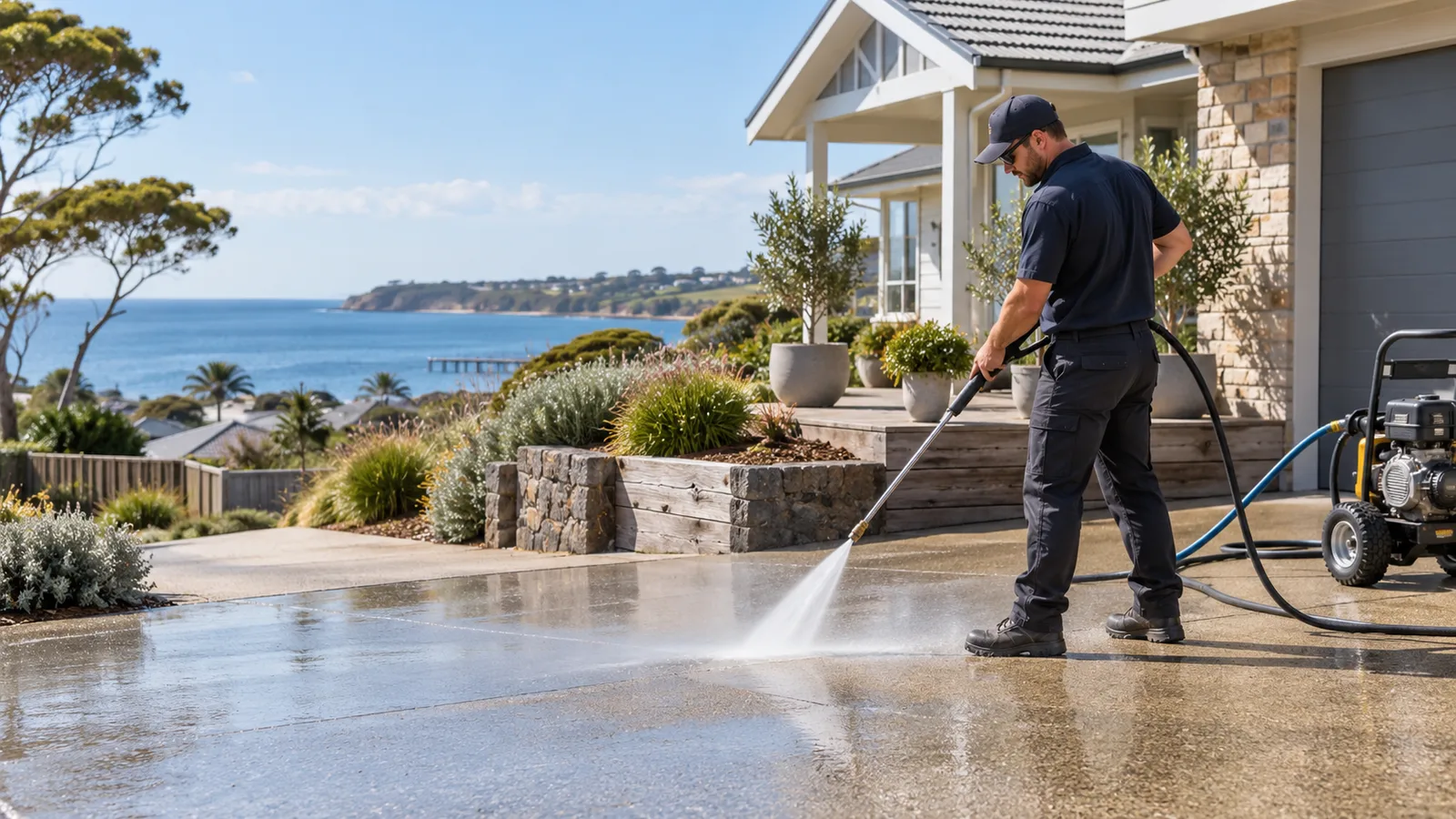
You might notice a green film creeping across a garden path, dark patches appearing on the driveway, or a familiar entrance feeling noticeably slick after rain. These changes often develop gradually, which is why it's easy to overlook them until the surface starts looking tired or feels different underfoot.
The important question to remember is, “Why has it appeared here, and what does the surface actually need?” Understanding that difference can help you avoid treating every green or black patch as the same problem.
Why Does Outdoor Concrete Turn Green?
A green film or patch on concrete is often associated with moisture and organic growth such as algae or moss. These growths are more likely to appear where surfaces stay damp, receive limited sunlight, or collect debris. RHS guidance notes that algae commonly forms a green film on hard surfaces such as concrete, while moss tends to favour damp, shady areas.
But green doesn't automatically mean algae, and you don't need to identify the exact organism to spot the conditions that may be contributing to the problem.
Look at the area around the patch. Does water sit there after rain? Is it shaded for most of the day? Do leaves and other garden debris collect nearby? If one part of the driveway keeps turning green while another stays relatively clear, those differences can tell you more than the colour alone.
In other words, look at the conditions around the concrete, instead of just the colour on it.
What Can Cause Black or Dark Patches on Concrete?
Black or dark concrete can be caused by several things, and it isn't possible to identify the cause from colour alone. Ground-in dirt, tyre marks, leaf debris, moisture-related discolouration, organic growth and other stains can all change how a surface looks.
Context matters. A dark strip where a car is regularly parked tells a different story from a patch sitting beneath dense planting or in a corner that stays damp after rain.
That's why it's worth looking at where the mark is, what sits around it, and whether it changes with the weather before deciding what it needs. If you're not sure what you're looking at, describe the location and what you've noticed when asking for an assessment rather than assuming it's “black mould”.
Why Does Outdoor Concrete Become Slippery?
Outdoor concrete can become slippery when wet, particularly when water combines with leaves, dirt, moss, algae or other surface contamination.
WorkSafe Victoria notes that water and contaminants can reduce friction between footwear and a walking surface, and identifies wet leaves, moss and other contaminants as potential outdoor slip hazards. Its guidance is workplace-focused, but the underlying principle is straightforward: a surface that feels perfectly fine when dry can behave very differently when it is wet or contaminated.
That matters most on steps, sloping paths, driveways, and frequently used entrances. If an area feels noticeably slippery, don't walk across it just to test how bad it is. Keep people away from an obviously hazardous section and consider having the surface assessed.
And remember: cleaning may remove contamination, but it won't automatically fix every reason a surface feels slippery. Drainage, surface wear, slope and the condition of the concrete can all matter.
Which Outdoor Areas Are More Likely to Stay Damp or Dirty?
Some parts of a property naturally hold onto more moisture, dirt and garden debris than others. If you're trying to work out why one patch of concrete keeps changing while the rest looks fine, start by looking at the surroundings.
Common trouble spots include:
Shaded side paths: Less direct sunlight can mean the surface stays damp for longer.
Areas beneath trees and shrubs: Leaves, twigs, and other organic debris can settle on the concrete.
Low spots and corners: Water may sit here after rain instead of draining away quickly.
Steps and entrances: These deserve extra attention because they're used regularly and grip changes can matter.
Edges beside garden beds: Soil and plant debris can gradually make their way onto the path or driveway.
None of these conditions automatically means you'll get algae, moss, or staining. They're simply useful clues when you're trying to understand why a particular section of concrete looks different from the rest.
Quick Guide: What Are You Seeing on Your Concrete?
Visible sign | Possible explanations | Sensible next step |
Green film or patches | Moisture-related organic growth may be present. | Look for shade, persistent dampness, and debris; discuss suitable cleaning. |
Black or dark areas | Dirt, weathering, vehicle marks, organic material, or other stains. | Check the location and pattern; do not assume it is mould. |
Slippery when wet | Water and surface contamination may reduce traction. | Avoid unsafe access and have the area assessed. |
Staining returns quickly | Moisture, shade or ongoing debris may still be present. | Check drainage and recurring sources of build-up. |
Cracks, flaking or coated concrete | An older, damaged, or treated surface may need extra care. | Review surface condition before choosing a cleaning method. |
Pro Tip:
If it's safe to do so, look at the problem area when the concrete is dry and again after rain. You may notice that water collects in one spot, leaves gather against an edge, or a shaded section stays damp long after the rest has dried. Those little details can be surprisingly useful when you're trying to work out why the staining keeps coming back, and when you're explaining the problem to a cleaning provider.
Will Pressure Cleaning Remove Every Green or Black Mark?
No. Pressure cleaning won't remove every type of green or black mark, and there isn't one cleaning approach that suits every concrete surface.
Surface dirt and organic build-up may respond well to cleaning, but the result depends on what is causing the mark and the condition of the concrete itself. Older, coated, damaged, or weathered surfaces may need a different level of care.
There's another point worth considering: removing the visible mark doesn't necessarily remove the reason it appeared. If water continues to collect in the same place or leaves keep building up beneath a tree, the surface may discolour again over time.
That's why a proper look at the concrete matters before deciding how it should be cleaned. Pressure cleaning is a way of addressing the surface, not a guarantee that every stain will disappear or never return.
For homeowners looking for professional pressure cleaning across the Bellarine Peninsula, M Warren Maintenance can assess the area and discuss what may be suitable.
What Should Be Checked Before Driveway or Path Cleaning?
Before cleaning a driveway or path, it's worth looking at a few things beyond the stain itself:
The condition of the concrete: Is it smooth, textured, cracked, flaking, painted, or sealed?
The type of marking: Does it look like loose dirt, surface build-up, vehicle marks, or something less obvious?
Where the water goes: Could runoff or loosened debris reach a stormwater drain?
How the area is used: Is it a main entrance, step, sloping driveway, or regularly used path?
What's around it: Are there garden beds, walls, doors, vehicles, or other surfaces nearby that need protecting?
Runoff is particularly important. EPA Victoria notes that stormwater drains can carry pollutants into waterways and that the general environmental duty includes preventing waste from entering stormwater drains where reasonably practicable.
If the concrete is damaged, delicate, or previously coated, that should also be taken into account before a cleaning method is chosen. The aim is to clean the surface appropriately for its condition.
How Can You Reduce Recurring Green or Dark Build-Up?
Cleaning the concrete is only part of the picture. If the same area keeps becoming green or dark, look at what's happening around it.
Keep leaves and loose debris from building up where practical, and pay attention to places where water repeatedly collects. If a garden bed, overhanging vegetation or drainage issue is keeping one section damp, addressing that surrounding condition may help reduce recurring build-up.
There are no guarantees that a driveway will stay permanently stain-free. But understanding why a particular area keeps getting dirty or discoloured can make future maintenance much more effective.
What Matters for Outdoor Concrete Around the Bellarine Peninsula?
Every property has its own combination of sun, shade, vegetation, drainage and day-to-day use.
A driveway in Ocean Grove may have completely different conditions from a sheltered garden path in Point Lonsdale, while a property in Queenscliff may have its own pattern of shade, planting and water movement.
So rather than assuming a particular cause because a property is coastal or because of where it is located, look at the surface itself. Where does water collect? Where do leaves settle? Which areas stay shaded? Has anything changed over time?
Those observations are far more useful when deciding what a particular concrete surface may need.
When Should You Contact M Warren Maintenance?
If your driveway or path has persistent build-up, recurring green or dark staining, or an area that becomes noticeably slippery after rain, it may be worth getting the surface looked at rather than repeatedly guessing at the cause.
This is particularly useful when the area is difficult to access, heavily soiled, regularly used, or has a finish you're unsure about.
M Warren Maintenance provides high-pressure cleaning across its confirmed Bellarine service area, including Ocean Grove, Point Lonsdale, Queenscliff, Barwon Heads, Leopold, Drysdale and Curlewis.
When you get in touch, describe what you've noticed, such as where the staining is, what it looks like, and whether the area changes after rain. That gives you a better starting point for discussing the right scope of cleaning for the property.
Helpful information
Frequently asked questions
Why does outdoor concrete turn green?
Outdoor concrete can turn green when moisture allows algae, moss, or other organic growth to build up on the surface. Shade, leaves, and areas that stay damp after rain can all contribute. However, green colouring alone doesn't confirm exactly what is growing there, so the surrounding conditions should be considered before choosing a cleaning approach.
Are black patches on a driveway always mould?
No. Black or dark patches can have several causes, including dirt, vehicle marks, organic debris, moisture-related discolouration, and different kinds of surface staining. Appearance alone cannot confirm mould. Consider where the patch is, whether it changes after rainfall, and what material collects nearby before deciding how it should be treated.
Do algae or moss make concrete slippery?
Yes, algae and moss can contribute to slippery concrete, particularly when the surface is wet. The amount of risk depends on the surface, contamination, moisture, and how it is used. Avoid a clearly slippery area rather than walking on it to test traction, and consider an appropriate assessment.
Why is my concrete slippery after rain?
Rainwater can combine with dirt, leaves, organic build-up, or a worn surface finish and reduce traction. A walkway may feel different when wet than dry, even if its appearance has not changed much. Pay special attention to steps, ramps, and frequently used entrances; cleaning alone may not resolve an underlying surface or drainage issue.
Can pressure cleaning remove every kind of concrete stain?
No. Some surface dirt and build-up may respond to cleaning, but other stains can persist or require a different approach. Concrete condition, finish, coatings, and the stain's cause all matter. Have the surface assessed before choosing a method, and be cautious of anyone promising to remove every mark without first understanding it.
Will green concrete stay clean once it has been washed?
Not necessarily. If the same moisture, shade, or debris conditions remain, green build-up may return over time. Cleaning can address visible contamination, but it does not remove every underlying cause. Observing where water collects and where leaves build up can help guide future maintenance decisions without promising a permanent result.
What should be considered before cleaning older or sealed concrete?
Check for cracking, flaking, worn areas, coatings, or signs of previous treatment. Older or sealed surfaces may respond differently to cleaning, and aggressive treatment can be unsuitable for some finishes. Also consider access and where runoff will go. The surface condition should be considered before deciding how it should be cleaned.
Does M Warren Maintenance offer pressure cleaning in the Bellarine Peninsula?
Yes. M Warren Maintenance provides high-pressure cleaning across the Bellarine Peninsula, including Ocean Grove, Point Lonsdale, Queenscliff, Barwon Heads, Leopold, Drysdale and Curlewis. If your outdoor concrete has green or dark build-up, or feels slippery after rain, you can view the high-pressure cleaning service or request a quote for your property.