A once-straight fence may develop lean, loose panels or a gate that no longer closes properly. Movement may appear after strong winds, or develop gradually.
A leaning fence does not automatically mean the whole boundary needs replacing. Before arranging fence repair or strengthening, it helps to understand what has moved and which parts remain sound. This guide explains possible causes, warning signs and the details homeowners and property managers can share when requesting an assessment.
Why Do Existing Fences Start Leaning?
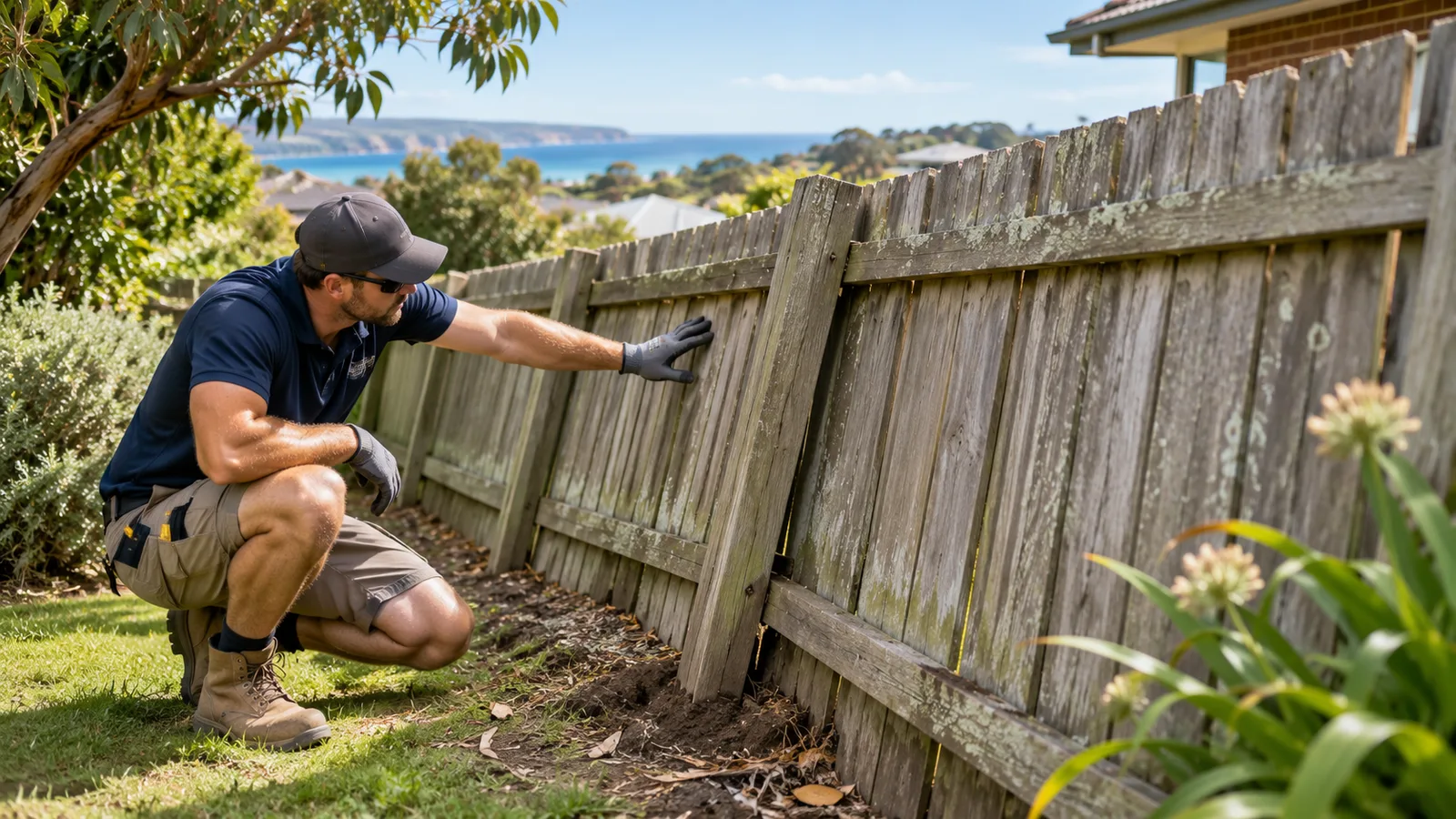
Understanding why fences lean starts with checking which parts have lost stability. Fence post movement, loose rails or damaged panels can affect the rest of the fence line because the components work together.
Possible causes include loose fence posts, timber deterioration near ground level, changing soil conditions, repeated wind exposure and worn joints or fixings. Age can contribute as materials and connections deteriorate, but an older fence is not necessarily beyond repair. More than one issue may be present.
A moving panel may be attached to a shifted post or loose rail. The visible lean is a clue, rather than a diagnosis.
Common Fence Movement Causes: Quick Comparison
Possible cause | What you may notice | What to discuss |
Post movement | A leaning post or a section out of alignment | Whether the post and surrounding support can be assessed |
Timber deterioration | Soft, split or weakened sections near posts | Whether the existing structure is suitable for repair |
Soil or moisture changes | Movement near disturbed or wet ground | Drainage, ground conditions and post stability |
Wind exposure | Sections shifting or loosening after strong weather | Fixings, posts and affected fence length |
Loose rails or fixings | Rattling panels, widening gaps or gate misalignment | Which connections need inspection |
What Warning Signs Suggest a Fence Is Moving?
Changes in alignment, widening gaps, loose rails and altered gate movement can all be warning signs. You may also notice fence posts moving in the wind. Observe from a safe position without touching an unstable section:
A post or panel tilts further than neighbouring sections.
Gaps have opened between panels, posts or adjoining sections.
Rails or fixings appear loose, split or detached.
A gate has started rubbing, dragging or failing to latch.
The fence moves noticeably in the wind or has shifted after a storm.
Timber near ground level looks softened, broken or significantly deteriorated.
Do not push, shake or lean on an unstable fence to test its strength. If a section looks close to falling, keep people and pets clear and seek an appropriate assessment.
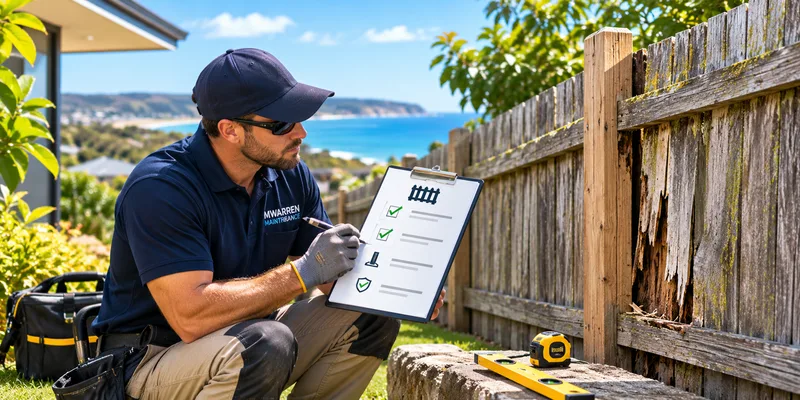
Pro Tip: Take clear photos of affected posts and panels from a safe position, and note whether the lean seems recent or is worsening. Photos can help explain the problem when requesting a quote, but suitability for strengthening should be assessed on site..
How Can Soil, Moisture, and Weather Affect Fence Stability?
Soil changes can reduce support around fence posts, while prolonged moisture can contribute to timber deterioration. Wind also puts pressure on panels and their connections. These factors may act together, so weather alone does not explain every leaning fence.
Weather also affects exposed fence lines. Strong gusts put pressure on panels and their connections. Victoria State Emergency Service notes that storms can bring strong winds and turn loose outdoor items into hazards. Once conditions are safe, check for visible changes from a safe position. Storm damage still needs assessment before the cause of fence movement can be confirmed.
Across the Bellarine Peninsula, neighbouring properties can have different wind exposure, drainage, vegetation and fence construction. Ground that has been disturbed, eroded or left unusually wet may need closer assessment. A coastal address alone does not identify why a fence has shifted.
If you also notice damp or slippery hard surfaces nearby, our guide to why outdoor concrete turns green, black or slippery explains how shade, debris and moisture can affect concrete. These conditions may be useful to mention during a property assessment, but they do not establish why a fence is moving.
Can Loose or Damaged Fence Posts Be Strengthened?
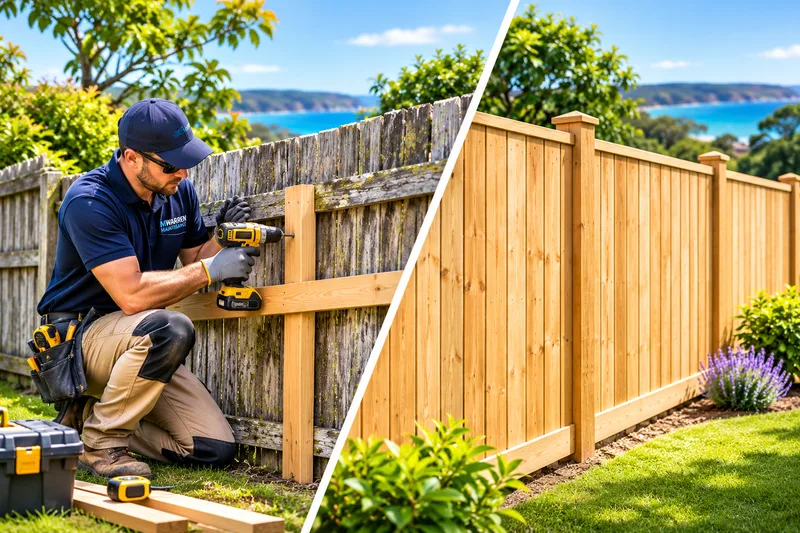
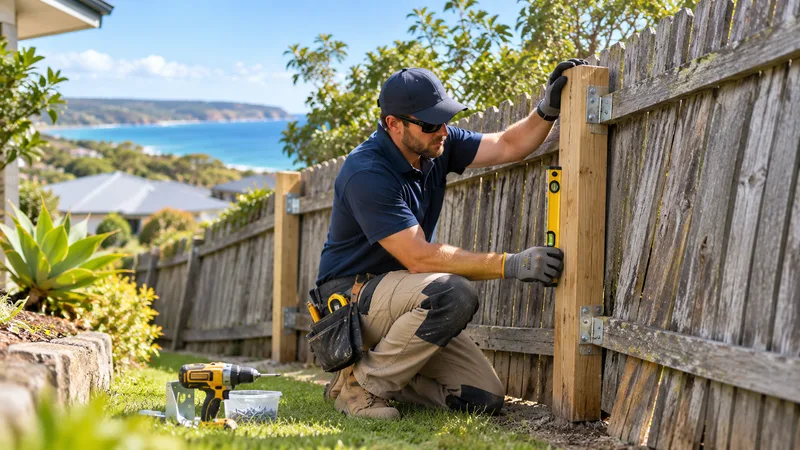
Loose or damaged posts can sometimes be strengthened if enough of the existing fence remains sound. Depending on its condition, fence repair may involve securing loose components, replacing individual damaged parts or adding support posts where suitable.
Extra posts are not a universal fix. They may not address widespread timber deterioration, severe panel damage or unstable surrounding ground. The posts, rails, panels and affected length need to be assessed before fence strengthening is recommended.
M Warren Maintenance repairs, maintains and strengthens existing fences, including extra-post solutions where suitable. Whether that approach is practical depends on the condition of the fence and the site.
When Is Fence Repair Worth Considering Rather Than Replacement?
Fence repair is worth discussing when movement or damage appears limited and enough of the existing fence remains sound to support a practical repair. A few loose fixings or one affected section may present a different situation from a fence with widespread rotten posts and damaged rails.
To compare repair and replacement options, ask which parts have moved, how much of the fence remains sound and whether the damage is localised or widespread. The proposed work should address the affected components rather than simply make the fence look straighter.
If deterioration or instability is extensive, repair may not be appropriate. Further advice from a provider who assesses replacement options may be needed. A responsible quote should explain the limits of the proposed repair without guaranteeing that it will resolve every issue.
If the fence is shared with a neighbour, discuss proposed work before proceeding. Victoria Legal Aid explains that dividing-fence repairs and replacement involve rules about responsibilities, payments and notices. Check the guidance before agreeing to shared-boundary work.
What Details Help With a Fence Repair Quote?
A useful fence repair quote starts with your suburb, the fence type, the affected length and any access restrictions. Describe what you can see rather than trying to identify the cause yourself.
When you enquire, it can help to provide:
Your suburb and the location of the fence on the property.
The fence material or type, if you know it.
Whether posts, rails, panels or the gate appear to be affected.
Approximately how much of the fence line is leaning or moving.
When you first noticed the change and whether it seems to be worsening.
Any access restrictions, adjacent structures or nearby garden beds.
Clear photographs taken from a safe distance, if available.
Photos can help start the conversation, but they may not show deterioration below ground level or hidden damage at connections. An on-site assessment may still be needed to decide whether extra posts, targeted repairs or another approach are suitable.
When comparing quotes, check which sections and tasks are included, what is excluded and how any additional damage would be handled. Strengthening one existing section has a different scope from replacing an entire fence.
Fence Repair and Strengthening Across the Bellarine Peninsula
M Warren Maintenance provides fence repair and strengthening across the Bellarine Peninsula, including Point Lonsdale, Queenscliff, Ocean Grove, Barwon Heads, Leopold, Drysdale and Curlewis. The service focuses on maintaining and repairing existing fences, with extra-post solutions considered where suitable.
If you need fence repair on the Bellarine Peninsula, share what is moving and any access restrictions. Review our fence repair and strengthening service or use the contact page to request a property-specific discussion.
For wider outdoor upkeep, our guide on how often gutters should be cleaned on Bellarine homes explains how surrounding trees, debris and rain exposure can affect maintenance needs. It covers a separate maintenance task rather than the cause of fence movement.
Helpful information
Frequently asked questions
Why does an existing fence lean?
An existing fence may lean when posts lose stability, supporting soil changes, timber deteriorates or connections loosen. Wind and repeated strain can contribute. The cause needs to be assessed for that fence; a visible lean alone does not confirm it.
Can extra posts help strengthen a leaning fence?
Yes, extra posts may help strengthen a leaning fence where the remaining structure and ground conditions are suitable. They are not a universal solution for rotten timber, extensive damage or unstable ground. Suitability needs to be assessed first.
Does every leaning fence need replacing?
No. A leaning fence may be suitable for repair or strengthening when enough of the structure remains sound. Widespread deterioration or instability may make repair unsuitable and require a separate assessment of replacement options.
What should I include when requesting a fence repair quote?
Include your suburb, fence type if known, the affected length, visible post or rail damage, when movement began and any access restrictions. Add clear photos taken from a safe position if available. An on-site assessment may still be required.